The Invisible Handshake: How Real-Time Tracking and Personalized Logistics Are Redefining Delivery Trust
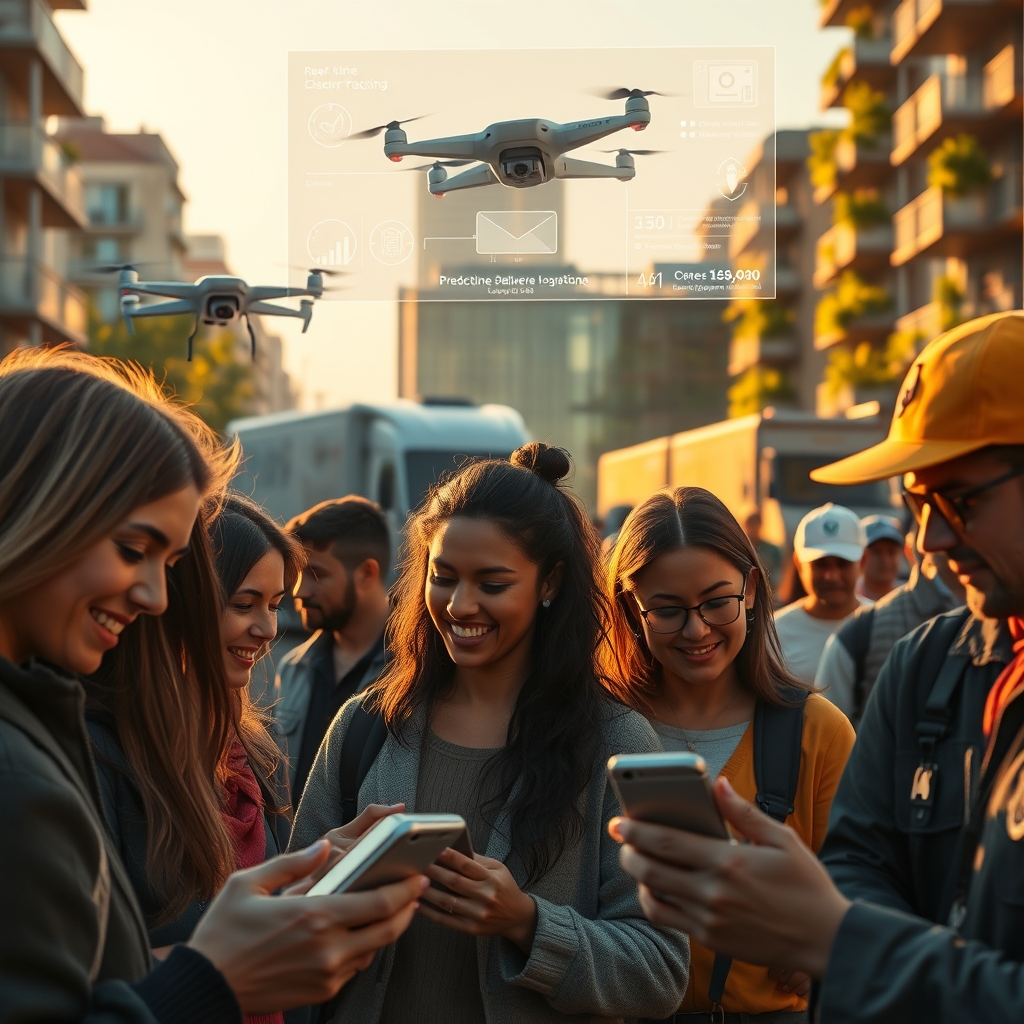
The modern consumer doesn’t just want their package delivered—they want to feel like they’re part of the journey. The era of passive shipping, where customers were left in the dark until a package magically appeared at their doorstep, is fading. In its place, a new paradigm is emerging: one where logistics isn’t just a behind-the-scenes operation but an interactive, transparent, and deeply personalized experience. At the heart of this transformation lies the fusion of real-time tracking and customer-centric logistics, a combination that’s turning every delivery into a conversation rather than a transaction.
The Psychology of Visibility: Why Real-Time Tracking is More Than Just a Feature
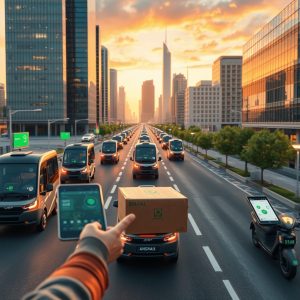
Imagine ordering a gift for a loved one, only to spend the next 48 hours refreshing a tracking page, wondering if it will arrive on time. The anxiety of the unknown isn’t just frustrating—it’s a breach of trust. Real-time tracking isn’t merely about providing updates; it’s about restoring confidence. Studies show that customers who have access to live tracking are 30% more likely to rate their delivery experience as positive, even if the package arrives late. Why? Because visibility creates a sense of control. When customers can see their package moving through each stage of the journey—from warehouse to courier to their doorstep—they feel less like passive recipients and more like active participants in the process.
But the benefits of real-time tracking extend beyond psychological comfort. For businesses, it’s a powerful tool for reducing customer service inquiries. A staggering 40% of support tickets in logistics are related to “Where is my order?” queries. By providing granular, real-time updates, companies can cut down on these inquiries, freeing up resources to focus on more complex issues. Moreover, real-time data allows for proactive problem-solving. If a delay is detected, automated systems can notify the customer before they even realize something is wrong, turning a potential complaint into an opportunity to demonstrate responsiveness.
Personalization at Scale: The Art of Making Every Customer Feel Like the Only One
In an age where consumers expect brands to know them better than they know themselves, logistics can no longer afford to be a one-size-fits-all operation. Personalized logistics communication is the next frontier in customer experience, and it’s not just about addressing someone by their first name in an email. It’s about tailoring the entire delivery journey to individual preferences, behaviors, and needs.
Consider the rise of dynamic delivery scheduling. Instead of forcing customers to wait at home for a vague “between 9 AM and 5 PM” window, companies are now offering time slots that adapt to the customer’s schedule. Some platforms even allow users to reschedule deliveries on the fly, using AI to predict the best alternative times based on traffic patterns, courier availability, and the customer’s past behavior. This level of flexibility doesn’t just improve satisfaction—it reduces failed delivery attempts, which cost businesses billions annually in redelivery fees and lost productivity.
Then there’s the concept of value-added packaging. For some customers, sustainability is paramount, and they’ll pay a premium for eco-friendly packaging or carbon-neutral shipping. For others, the unboxing experience is a key part of their purchase, and they’ll appreciate branded, Instagram-worthy packaging. By leveraging data from past interactions, companies can customize not just the delivery experience but the entire presentation of the package, turning a mundane transaction into a memorable moment.
The Role of AI in Predictive Delivery Analytics
Personalization isn’t just about reacting to customer preferences—it’s about anticipating them. Predictive delivery analytics, powered by machine learning, are enabling companies to do just that. By analyzing vast amounts of data—from weather patterns to traffic conditions to historical delivery times—AI can forecast potential delays before they happen and suggest alternative routes or delivery methods. For example, if a storm is predicted to hit a certain area, the system might automatically reroute packages to avoid delays or notify customers of a potential impact on their delivery window.
But the real magic happens when predictive analytics intersect with customer behavior. AI can identify patterns in how different customers interact with delivery updates. Some might prefer SMS notifications, while others opt for push notifications or email. Some want every detail, from the moment the package leaves the warehouse to the second it’s handed to their neighbor. Others only care about the final delivery confirmation. By learning these preferences, logistics platforms can tailor their communication to each individual, reducing notification fatigue and increasing engagement.
Frictionless Returns: The Unsung Hero of Customer Loyalty
No discussion of customer-centric logistics would be complete without addressing the often-overlooked aspect of returns. For many consumers, the ease of returning a product is just as important as the ease of receiving it. In fact, 92% of customers say they will buy again from a retailer if the returns process is easy. Yet, returns are often treated as an afterthought, a logistical headache rather than an opportunity to build trust.
Frictionless returns management is about more than just providing a return label. It’s about creating a seamless, stress-free experience from start to finish. This means offering multiple return options—whether it’s dropping off at a local store, scheduling a pickup, or using a third-party drop-off location. It means providing instant refunds or exchanges, without forcing customers to wait days for a return to be processed. And it means keeping customers informed every step of the way, just as they would be during the initial delivery.
Some companies are taking this a step further by integrating returns into their sustainability initiatives. For example, offering incentives for customers to return packaging materials or opt for consolidated returns (where multiple items are returned in a single shipment) can reduce waste and lower costs. Others are using returns data to identify trends—such as which products are most frequently returned and why—and feeding that information back to their suppliers to improve product quality or descriptions.
Hyper-Local Delivery Networks: The Secret Weapon for Speed and Sustainability
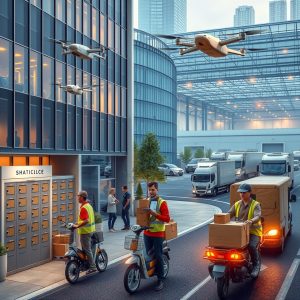
The rise of hyper-local delivery networks is another game-changer in the quest for customer-centric logistics. By leveraging local warehouses, micro-fulfillment centers, and even retail stores as distribution points, companies can drastically reduce delivery times while also cutting down on carbon emissions. This approach is particularly effective in urban areas, where same-day or even one-hour delivery is becoming the norm rather than the exception.
Hyper-local networks also enable a more personalized experience. For example, a customer ordering groceries in New York might receive their delivery from a local store just a few blocks away, while a customer in Los Angeles gets theirs from a different hub. This not only speeds up delivery but also allows for greater customization, such as including locally sourced products or tailoring delivery times to the customer’s neighborhood.
Moreover, hyper-local networks can be more resilient in the face of disruptions. During the COVID-19 pandemic, companies with decentralized distribution models were better able to adapt to sudden changes in demand or supply chain bottlenecks. By spreading inventory across multiple locations, they could reroute orders quickly and avoid the delays that plagued more centralized operations.
As logistics continues to evolve, the lines between technology, customer experience, and sustainability are blurring. The companies that thrive in this new landscape won’t be those that simply move packages from point A to point B the fastest. They’ll be the ones that make customers feel seen, heard, and valued at every step of the journey. Whether it’s through real-time tracking that puts control in the hands of the consumer, personalized communication that anticipates their needs, or frictionless returns that turn a potential negative into a positive, the future of logistics is about more than efficiency—it’s about empathy. And in a world where trust is the ultimate currency, that’s a delivery worth waiting for.