The Invisible Threads: Weaving the World Together Through Global Logistics
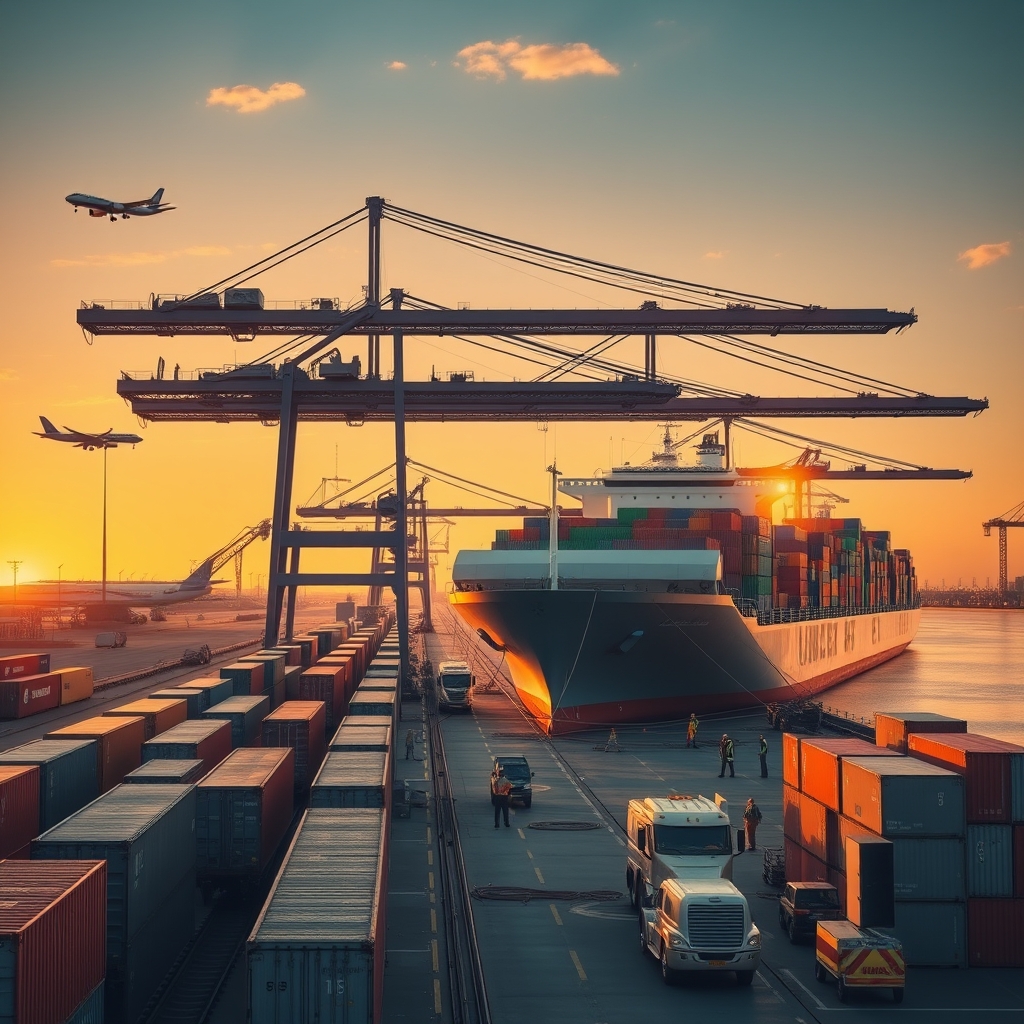
The world hums with a quiet rhythm, a pulse of movement that most of us rarely notice. It is the sound of containers sliding onto ships in Shanghai, the whisper of cargo planes slicing through midnight skies over Frankfurt, the steady rumble of trucks rolling across endless highways. This is the symphony of global logistics—a vast, intricate dance that binds continents, economies, and lives in ways both profound and unseen. To stand at the edge of a bustling port, watching cranes dip and rise like mechanical birds, is to witness the invisible threads that stitch our modern existence together.
The Alchemy of Movement
There is something almost alchemical in the way raw materials, ideas, and labor transform into the goods that fill our homes, our stores, and our lives. A smartphone assembled in Shenzhen begins its journey as rare earth minerals mined in the Congo, travels through refineries in Malaysia, and is then shipped to factories where it is pieced together by hands that may never meet. The final product, sleek and gleaming, arrives on a doorstep thousands of miles away, as if by magic. But the true sorcery lies not in the device itself, but in the unseen network that made its existence possible: the freight forwarders, the customs agents, the warehouse managers, and the truck drivers who ensure that every component arrives just in time, every document is in order, every delay is anticipated and mitigated.
This is the art of supply chain optimization—a delicate balance of precision and adaptability, where a single misstep can unravel months of planning. The best logistics providers do not merely move goods; they choreograph a ballet of efficiency, where every player, from the forklift operator to the data analyst, understands their role in the grand performance. In an era where consumers expect next-day delivery and businesses demand just-in-time inventory, the pressure to perfect this dance has never been greater. Yet, for all its complexity, there is a quiet beauty in the way these systems function, a testament to human ingenuity and collaboration on a global scale.
The Weight of the World on Steel Wheels
Consider the journey of a single shipping container. It may begin its life in a factory in Vietnam, filled with textiles destined for a retailer in Chicago. Loaded onto a truck, it travels to the port of Haiphong, where it is hoisted onto a massive cargo ship bound for Los Angeles. Along the way, it crosses the South China Sea, navigates the bustling straits of Singapore, and rides the currents of the Pacific, all while enduring the relentless motion of the ocean. Upon arrival, it is transferred to a train, then to another truck, before finally reaching its destination—a journey of over 8,000 miles, completed in a matter of weeks.
This is the reality of intermodal goods transport, a seamless transition between sea, rail, and road that allows the global economy to function. Each mode of transport has its own language, its own challenges. Maritime cargo shipping, for instance, is a world of vast distances and unpredictable elements, where captains must contend with storms, piracy, and the ever-present risk of mechanical failure. Air freight logistics, by contrast, is a realm of speed and precision, where every minute counts and delays can cascade into costly disruptions. Overland distribution networks, meanwhile, are the veins and arteries of commerce, carrying the lifeblood of goods from ports to warehouses to storefronts, often under the watchful eyes of smart fleet management systems that track every mile, every stop, every gallon of fuel.
The Human Heartbeat Behind the Machines
For all the talk of automation and digital trade solutions, the logistics industry remains deeply human. Behind every algorithm, every GPS tracker, every automated warehouse, there are people—planners, drivers, dockworkers, customs officers—whose expertise and intuition keep the system running. A customs clearance agent, for example, is not merely a bureaucrat stamping papers; they are a gatekeeper, ensuring that goods flow smoothly across borders while protecting nations from illicit trade. A warehouse worker in Rotterdam might never meet the farmer in Kenya whose coffee beans they are packing, but their careful handling ensures that the beans arrive fresh and ready to brew in a café in Amsterdam.
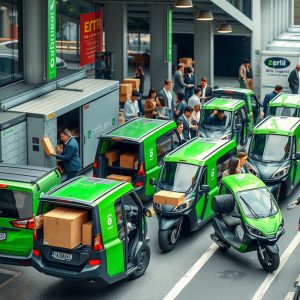
This human element is perhaps most visible in the realm of last mile delivery, that final, critical stretch where goods transition from the impersonal world of logistics to the intimate space of a customer’s home. The delivery driver who rings the doorbell, the courier who navigates narrow city streets on a bicycle, the warehouse associate who carefully packs a fragile item—these are the faces of an industry that often operates in the shadows. Their work is a reminder that behind every package, every shipment, every successful delivery, there is a story, a connection, a moment of human interaction that transcends the transactional nature of commerce.
The Future Unfolds: Logistics in the Digital Age
As the world grows more interconnected, the logistics industry is evolving at a breakneck pace. Digital trade solutions are transforming how goods are tracked, managed, and delivered, with blockchain technology promising unprecedented transparency and security. Third-party logistics providers are leveraging artificial intelligence to predict demand, optimize routes, and reduce waste, while express freight forwarding services are redefining what it means to deliver with speed. Cold chain services, once a niche market, are now a critical component of global health, ensuring that vaccines, fresh produce, and pharmaceuticals reach their destinations unspoiled. Even the humble shipping container is getting a makeover, with smart containers equipped with sensors that monitor temperature, humidity, and location in real time.
Yet, for all these advancements, the core challenge of logistics remains the same: to bridge the gap between here and there, between what is and what could be. The industry is not just about moving goods; it is about moving dreams, about turning the abstract into the tangible. A child’s toy ordered online, a life-saving medication sent across continents, a meal kit delivered to a busy family’s doorstep—these are the small miracles that logistics makes possible. And as the world continues to change, as borders blur and economies intertwine, the role of logistics will only grow more vital, more complex, and more beautiful.
The next time you hold a product in your hands, take a moment to trace its journey. Imagine the hands that built it, the ships that carried it, the roads it traveled, the people who made it all possible. In that simple act of imagination, you will glimpse the vast, invisible web of connections that sustains our world. It is a web spun not just of steel and data, but of human effort, ingenuity, and the quiet, relentless drive to keep the world moving forward, one shipment at a time.