The Great Logistics Circus: How We’re All Just Waiting for the Next Shipping Disaster
Oh, what a time to be alive—when your online order’s journey from a warehouse in Shenzhen to your doorstep is more dramatic than a Shakespearean tragedy. Global commerce logistics isn’t just about moving boxes from point A to point B anymore; it’s a high-stakes game of Tetris played on a global scale, where one wrong move sends the entire tower tumbling down. And yet, here we are, pretending that intermodal freight solutions and smart port infrastructure are going to save us from the next supply chain apocalypse. Spoiler alert: they won’t.
The Illusion of Control in a Chaotic System
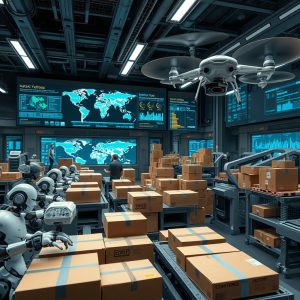
Let’s talk about autonomous fleet management, shall we? The idea that we can replace human error with algorithms and call it progress is almost adorable. Sure, self-driving trucks sound great—until one decides to take a nap on the highway because its sensors got confused by a particularly aggressive pigeon. And don’t even get me started on intelligent traffic management systems. They’re about as effective as a GPS that still thinks Blockbuster is a valid destination. We’ve built a world where traffic lights communicate with cars, but somehow, we still can’t prevent a single rogue container ship from blocking the Suez Canal for a week. Priorities, people.
Then there’s the myth of sustainable maritime transport. Oh, how quaint—shipping companies slapping a “green” label on their vessels because they’ve switched to slightly less toxic fuel. Congratulations, you’ve reduced your carbon footprint by 0.0001%. Meanwhile, the ocean is still a floating landfill, and your “eco-friendly” shipping container is probably carrying enough plastic trinkets to choke a whale. But hey, at least the marketing department got a raise.
The E-Commerce Lie: Faster, Cheaper, and Somehow Worse
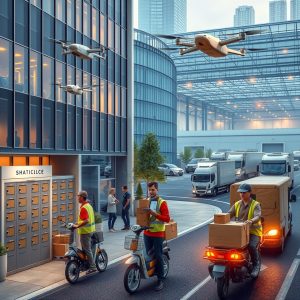
Cross-border e-commerce has turned the world into one giant Amazon warehouse, where the only thing faster than delivery is the rate at which we’re drowning in packaging waste. Next-generation telematics and digital freight forwarding promise to streamline everything, but let’s be real—most of these systems are just glorified spreadsheets with a fancy UI. You know what’s still the most reliable part of the supply chain? The poor soul on a bicycle weaving through traffic to deliver your $3 phone charger in under an hour. And yet, we’re supposed to believe that urban air mobility—aka drone deliveries—is the future. Sure, because nothing says progress like a swarm of buzzing robots dropping packages on unsuspecting pedestrians. What could go wrong?
And let’s not forget cold chain logistics, the unsung hero of the modern world. Because nothing says “I love you” like a perfectly chilled avocado that’s traveled 5,000 miles to sit in your grocery store for three days before turning into brown mush. The irony? We’ve perfected the art of keeping perishables fresh during transit, yet half the world still doesn’t have access to basic refrigeration. But sure, let’s focus on delivering gourmet ice cream to influencers in Manhattan. That’s definitely the priority.
The Ports Are Smart, But Are We?
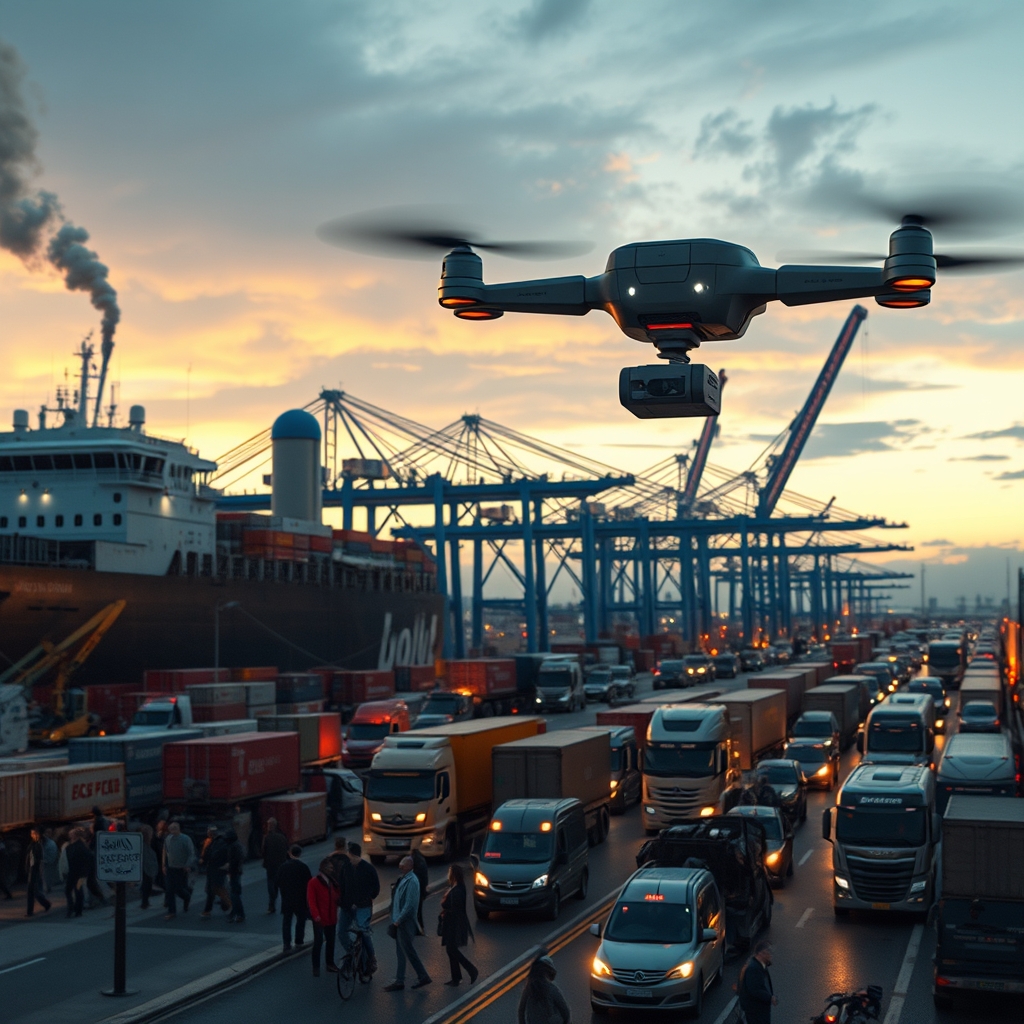
Smart port infrastructure is another gem in the logistics crown. Ports are now equipped with IoT sensors, AI-driven cranes, and enough data analytics to make a Silicon Valley bro swoon. Yet, somehow, we still have ships idling for days because the port’s “smart” system couldn’t predict that, oh I don’t know, a global pandemic would disrupt everything. It’s like buying a state-of-the-art espresso machine but still burning your coffee because you forgot to add water. The technology is there, but the human element—greed, incompetence, or sheer bad luck—always finds a way to muck it up.
And what about multimodal transportation systems? The idea that we can seamlessly switch between trucks, trains, and ships without losing a single package is laughable. In reality, it’s more like a game of telephone where the message gets more distorted with every handoff. Your package starts in a high-tech warehouse, gets loaded onto a truck, transferred to a train that’s running late, then onto a ship that hits a storm, and finally ends up in a last-mile delivery van stuck in traffic. By the time it arrives, the only thing “seamless” about it is the way your patience has been completely eroded.
The Last Mile: Where Dreams Go to Die
Ah, last-mile delivery logistics—the bane of every online shopper’s existence. It’s the part of the journey where your package goes from “out for delivery” to “we’ll try again tomorrow” with the enthusiasm of a sloth on a Monday morning. Companies throw around terms like “eco-friendly shipping” and “intelligent routing,” but at the end of the day, it’s still some overworked driver circling your neighborhood for hours because the algorithm decided your house is in a “high-density delivery zone.” Meanwhile, you’re refreshing the tracking page like it’s the final episode of your favorite show, only to be met with the crushing disappointment of “delivery attempted.”
And let’s not pretend that commercial real estate development and strategic land acquisition aren’t part of the problem. Every time a new industrial logistics park pops up, it’s hailed as a beacon of progress. But really, it’s just another place for companies to hoard land while pretending they’re solving the housing crisis by building warehouses instead of homes. Because nothing says “innovation” like turning prime real estate into a glorified storage unit for cheap plastic crap from overseas.
The Greenwashing Olympics: Who’s Winning?
Green aviation fuel, eco-friendly shipping, sustainable this, carbon-neutral that—it’s all just a giant game of “who can slap the most buzzwords on their website.” Aviation fleet modernization? Sure, let’s replace a few old planes with slightly less inefficient ones while ignoring the fact that the entire industry is built on burning fossil fuels. Urban air mobility? Because nothing says “sustainable” like a fleet of electric helicopters buzzing over cities, draining the grid and annoying everyone within a five-mile radius. But hey, at least the brochures look nice.
We’re so busy patting ourselves on the back for “innovating” that we’ve forgotten the whole point of logistics: to move things efficiently, affordably, and without destroying the planet. Instead, we’ve created a system where the only thing moving faster than packages is the rate at which we’re running out of excuses. So the next time you click “buy now” and marvel at how quickly your order arrives, remember: it’s not magic. It’s just a bunch of overworked, underpaid people and a whole lot of wishful thinking holding it all together. And one day, the whole circus is going to come crashing down. But until then, enjoy your two-day shipping.