Same Day Delivery Business: Meeting Customer Expectations in a Fast-Paced World
In today’s hyper-connected world, the demand for instant gratification has reshaped consumer expectations, particularly in the realm of e-commerce. The rise of same-day delivery businesses is not just a trend but a fundamental shift in how companies operate and how customers engage with brands. This evolution is driven by advancements in technology, logistics optimization, and a relentless focus on enhancing the customer experience. As businesses scramble to meet these demands, the question arises: how are they managing to deliver on the promise of speed without compromising on reliability or quality?
The Evolution of Same-Day Delivery
The concept of same-day delivery is not entirely new, but its widespread adoption is a phenomenon of the last decade. Early adopters like Amazon set the stage with services such as Amazon Prime, which initially offered two-day shipping and later expanded to same-day delivery in select markets. What began as a competitive advantage quickly became an industry standard, forcing retailers of all sizes to rethink their logistics strategies. The pressure to deliver faster has led to innovations in warehouse management, last-mile delivery solutions, and real-time tracking systems, all of which are critical to meeting the expectations of today’s consumers.
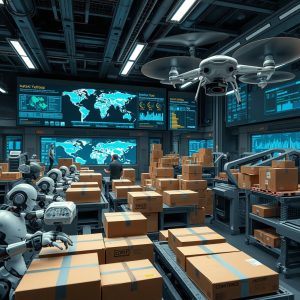
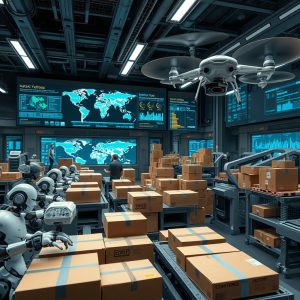
One of the most significant drivers of this evolution is the integration of artificial intelligence and machine learning into logistics operations. AI-powered algorithms analyze vast amounts of data to optimize delivery routes, predict demand, and manage inventory in real time. This level of automation not only speeds up the delivery process but also reduces operational costs, making same-day delivery a viable option for a broader range of businesses. Companies like Uber, DoorDash, and Instacart have further disrupted the market by leveraging gig economy workers to fulfill deliveries quickly, proving that agility and flexibility are just as important as scale.
Real-Time Package Tracking: Transparency as a Competitive Edge
In an era where customers expect transparency at every stage of their purchase journey, real-time package tracking has become a non-negotiable feature of same-day delivery services. Gone are the days when customers were content with vague delivery windows or the uncertainty of not knowing where their package was. Today, they demand minute-by-minute updates, accurate ETAs, and the ability to reroute deliveries on the fly. This shift has forced delivery businesses to invest heavily in tracking technologies that provide end-to-end visibility.
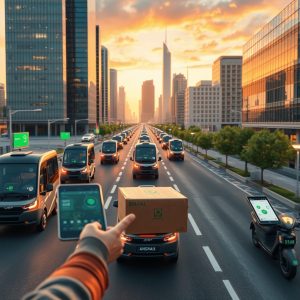
Modern tracking systems rely on a combination of GPS, RFID (Radio-Frequency Identification), and IoT (Internet of Things) devices to monitor packages in real time. These technologies enable customers to track their orders from the moment they leave the warehouse until they arrive at their doorstep. Some advanced systems even allow customers to receive notifications when their package is out for delivery, along with a live map showing the delivery driver’s location. This level of transparency not only enhances the customer experience but also builds trust, as customers feel more in control of their deliveries.
For businesses, real-time tracking is not just about keeping customers informed; it’s also a tool for operational efficiency. By monitoring deliveries in real time, companies can identify bottlenecks, optimize routes, and proactively address delays. This data-driven approach allows businesses to continuously refine their processes, ensuring that they can meet the growing demand for speed and reliability.
The Role of Smart Locker Delivery Systems
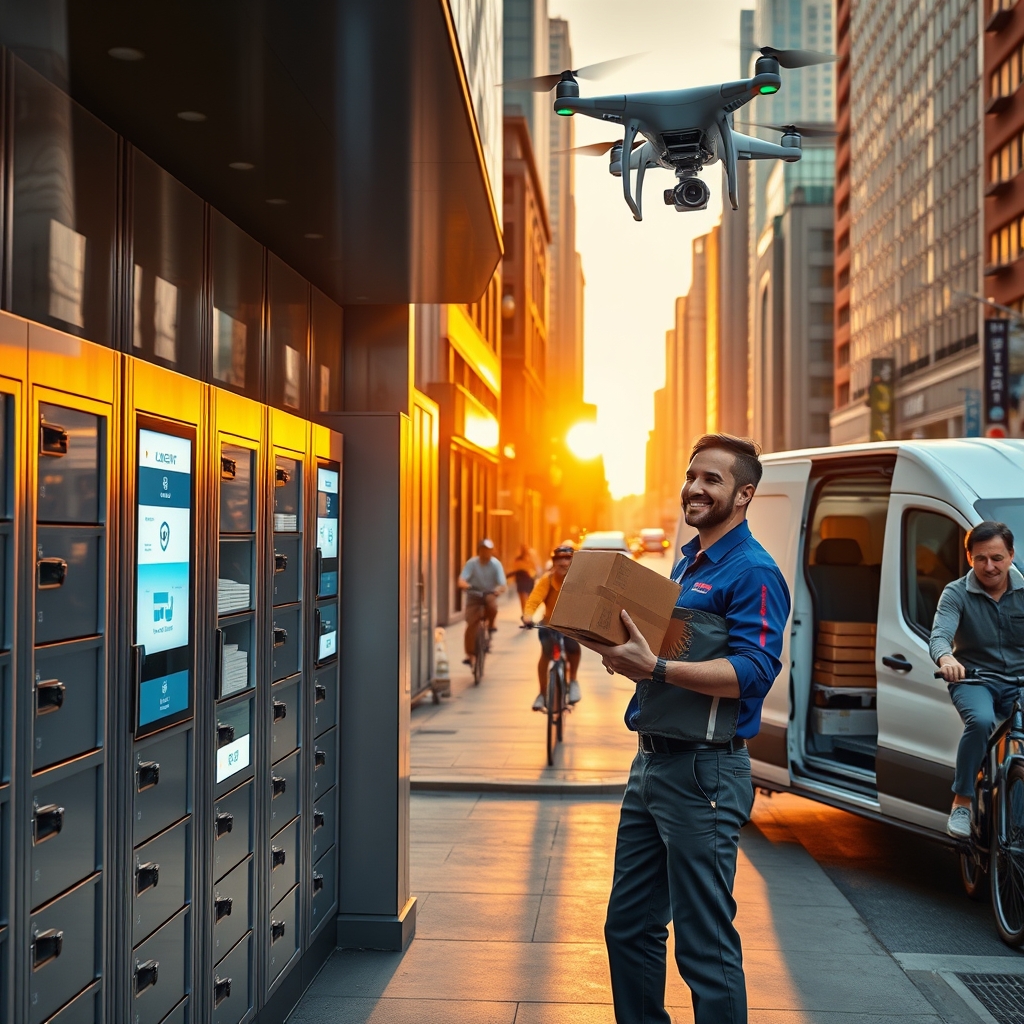
While real-time tracking addresses the transparency aspect of same-day delivery, smart locker systems are revolutionizing the final leg of the delivery process. These automated, self-service lockers provide a secure and convenient way for customers to retrieve their packages at their preferred time and location. Smart lockers are particularly useful in urban areas, where delivery challenges such as traffic congestion, limited parking, and security concerns can delay or complicate last-mile deliveries.
Smart lockers operate on a simple yet effective model: customers receive a notification with a unique code when their package is delivered to a nearby locker. They can then visit the locker at their convenience, enter the code, and retrieve their package. This system eliminates the need for customers to be present at a specific time for delivery, reducing the likelihood of missed deliveries and the associated costs of redelivery. For businesses, smart lockers offer a cost-effective solution to the last-mile problem, as they reduce the need for multiple delivery attempts and minimize the risk of package theft or damage.
Companies like Amazon, Walmart, and UPS have already deployed smart locker networks in high-density areas, and the trend is gaining traction globally. In addition to improving convenience for customers, smart lockers also contribute to sustainability efforts by reducing the carbon footprint associated with multiple delivery attempts. As urbanization continues to rise, smart lockers are poised to become an integral part of the same-day delivery ecosystem, offering a scalable solution to the challenges of last-mile logistics.
Enhancing Customer Experience Through Technology
At the heart of the same-day delivery revolution is a relentless focus on enhancing the customer experience. In a world where speed is often equated with quality, businesses must go beyond simply delivering packages quickly; they must also ensure that the entire process is seamless, transparent, and personalized. Technology plays a pivotal role in achieving this goal, enabling businesses to anticipate customer needs, address pain points, and deliver a superior experience at every touchpoint.
One of the most impactful ways technology enhances the customer experience is through personalization. By leveraging data analytics and AI, businesses can tailor delivery options to individual preferences, such as offering flexible delivery windows, preferred delivery locations, or even the option to schedule deliveries during off-peak hours. This level of customization not only improves customer satisfaction but also fosters loyalty, as customers feel that their unique needs are being met.
Another key aspect of enhancing the customer experience is proactive communication. Customers appreciate being kept in the loop, whether it’s through real-time tracking updates, SMS notifications, or automated emails. Proactive communication helps manage expectations and reduces anxiety, particularly in cases where delays or issues arise. By keeping customers informed every step of the way, businesses can turn potential frustrations into opportunities to demonstrate their commitment to service excellence.
The same-day delivery landscape is a testament to how technology and innovation can transform an industry. As businesses continue to push the boundaries of what’s possible, the focus remains on meeting and exceeding customer expectations. The integration of real-time tracking, smart lockers, and AI-driven logistics is not just about speed; it’s about creating a delivery experience that is efficient, transparent, and customer-centric. In a world where time is of the essence, the ability to deliver on the promise of same-day service is no longer a luxury but a necessity. The businesses that succeed in this fast-paced environment will be those that embrace technology, prioritize the customer experience, and remain agile in the face of ever-changing demands. The future of delivery is here, and it’s faster, smarter, and more customer-focused than ever before.