The Future of Corporate Asset Management: Integrating AI and IoT

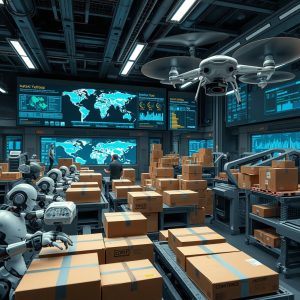
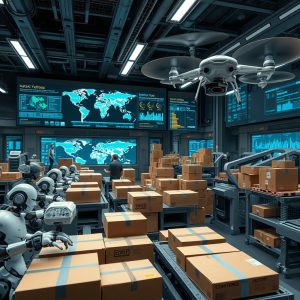
The corporate landscape is undergoing a seismic shift, driven by the convergence of two transformative technologies: Artificial Intelligence (AI) and the Internet of Things (IoT). Together, they are redefining the way businesses manage their assets, turning traditional, reactive approaches into proactive, data-driven strategies. This evolution is not just about efficiency—it’s about survival in an increasingly competitive and fast-paced world. Companies that fail to adapt risk falling behind, while those that embrace these technologies are unlocking unprecedented levels of operational excellence and cost savings.
The Power of Predictive Maintenance
One of the most significant advantages of integrating AI and IoT into asset management is the ability to predict equipment failures before they occur. Traditional maintenance strategies often rely on scheduled check-ups or reactive repairs, which can lead to costly downtime and unexpected disruptions. IoT sensors, embedded in machinery and equipment, continuously collect data on performance metrics such as temperature, vibration, and pressure. AI algorithms then analyze this data in real-time, identifying patterns and anomalies that signal potential failures.
For example, Siemens, a global leader in industrial manufacturing, has implemented AI-driven predictive maintenance across its factories. By leveraging IoT sensors and machine learning models, Siemens can predict equipment failures with up to 90% accuracy. This has resulted in a 10-15% reduction in maintenance costs and a 20% increase in equipment uptime. The financial impact is staggering—millions of dollars saved annually by avoiding unplanned downtime and extending the lifespan of critical assets.
Real-Time Tracking and Asset Visibility
In addition to predictive maintenance, AI and IoT are revolutionizing asset tracking and visibility. In industries like logistics, manufacturing, and healthcare, knowing the exact location and status of assets in real-time is crucial for operational efficiency. IoT-enabled devices, such as RFID tags and GPS trackers, provide continuous updates on the whereabouts and condition of assets, while AI processes this data to optimize routing, reduce loss, and improve utilization.
DHL, a global logistics giant, has harnessed the power of IoT and AI to enhance its asset management capabilities. By equipping its fleet and packages with IoT sensors, DHL can monitor the location, temperature, and humidity of shipments in real-time. AI algorithms analyze this data to predict delivery times, optimize routes, and even detect potential issues like delays or damage. The result? A 25% reduction in lost or misplaced shipments and a 15% improvement in delivery efficiency. For a company handling millions of shipments annually, these improvements translate into significant cost savings and customer satisfaction.
Data-Driven Decision Making
The true power of AI and IoT lies in their ability to turn raw data into actionable insights. Corporate asset management is no longer about gut feelings or historical trends—it’s about making decisions based on real-time data and predictive analytics. AI-driven platforms can process vast amounts of data from IoT devices, identifying trends, forecasting demand, and recommending optimal asset utilization strategies.
Take the case of Shell, a multinational energy company. Shell has deployed IoT sensors across its oil rigs, pipelines, and refineries to monitor equipment performance and environmental conditions. AI algorithms analyze this data to optimize maintenance schedules, reduce energy consumption, and even predict market demand for oil and gas. The impact has been profound: Shell has reduced its maintenance costs by 20% and improved asset utilization by 10%, all while enhancing safety and sustainability.
The Role of Digital Twins
A particularly exciting development in this space is the concept of “digital twins”—virtual replicas of physical assets that are continuously updated with real-time data from IoT sensors. Digital twins allow companies to simulate different scenarios, test maintenance strategies, and optimize asset performance without disrupting actual operations. AI enhances these digital twins by providing predictive insights and automating decision-making processes.
General Electric (GE) has been a pioneer in using digital twins for asset management. By creating digital replicas of its jet engines, wind turbines, and power plants, GE can monitor performance, predict failures, and optimize maintenance schedules. This approach has led to a 40% reduction in unplanned downtime and a 25% increase in asset lifespan. For an industry where every minute of downtime can cost millions, the value of digital twins is undeniable.
Overcoming Challenges and Barriers
While the benefits of AI and IoT in asset management are clear, implementing these technologies is not without challenges. One of the biggest hurdles is the integration of legacy systems with new IoT and AI platforms. Many companies still rely on outdated infrastructure that was not designed to handle the volume and velocity of data generated by IoT devices. Additionally, there are concerns around data security and privacy, as the increased connectivity of assets can create vulnerabilities if not properly managed.
Another challenge is the skills gap. AI and IoT require specialized knowledge in data science, machine learning, and cybersecurity. Companies must invest in training and hiring the right talent to fully leverage these technologies. However, the long-term benefits far outweigh the initial challenges. Companies that successfully navigate these barriers are positioning themselves for sustained growth and competitive advantage.
Measuring ROI: The Proof Is in the Numbers
The return on investment (ROI) for AI and IoT in asset management is compelling. According to a report by McKinsey, companies that implement AI-driven predictive maintenance can reduce maintenance costs by up to 30% and increase equipment uptime by 20%. Similarly, IoT-enabled asset tracking can reduce loss and theft by up to 50%, while improving asset utilization by 10-20%. These numbers are not just theoretical—they are being realized by companies across industries.
For instance, Maersk, the world’s largest shipping company, has implemented IoT and AI to track its containers and optimize its fleet. By equipping containers with IoT sensors, Maersk can monitor their location, temperature, and humidity in real-time. AI algorithms analyze this data to optimize routes, reduce fuel consumption, and prevent spoilage of perishable goods. The result? A 10% reduction in fuel costs and a 5% increase in container utilization, saving the company hundreds of millions of dollars annually.
The future of corporate asset management is here, and it is being shaped by the powerful combination of AI and IoT. Companies that embrace these technologies are not only improving their bottom line but also gaining a competitive edge in an increasingly digital world. The journey may be challenging, but the rewards—greater efficiency, reduced costs, and enhanced decision-making—are well worth the effort. As businesses continue to evolve, those that leverage AI and IoT to transform their asset management strategies will be the ones leading the charge into the next era of industrial innovation.